
The Benefits of Reading to Your Child: From Baby Years

Updated: Oct 11
Can reading to a newborn really make a difference? From the first books I shared with my son at just two weeks old to what developmental research tells us about early language, I explore why reading matters long before children can understand a story.
I started reading to my son when he was just two weeks old. At that age, he certainly couldn't understand the adventures of Peter Rabbit or follow a story from beginning to end. But I was fascinated by how he responded to my voice, particularly when I changed its tone, volume or rhythm. Those little gurgles and coos made reading together feel like a conversation, even though he couldn't yet speak.
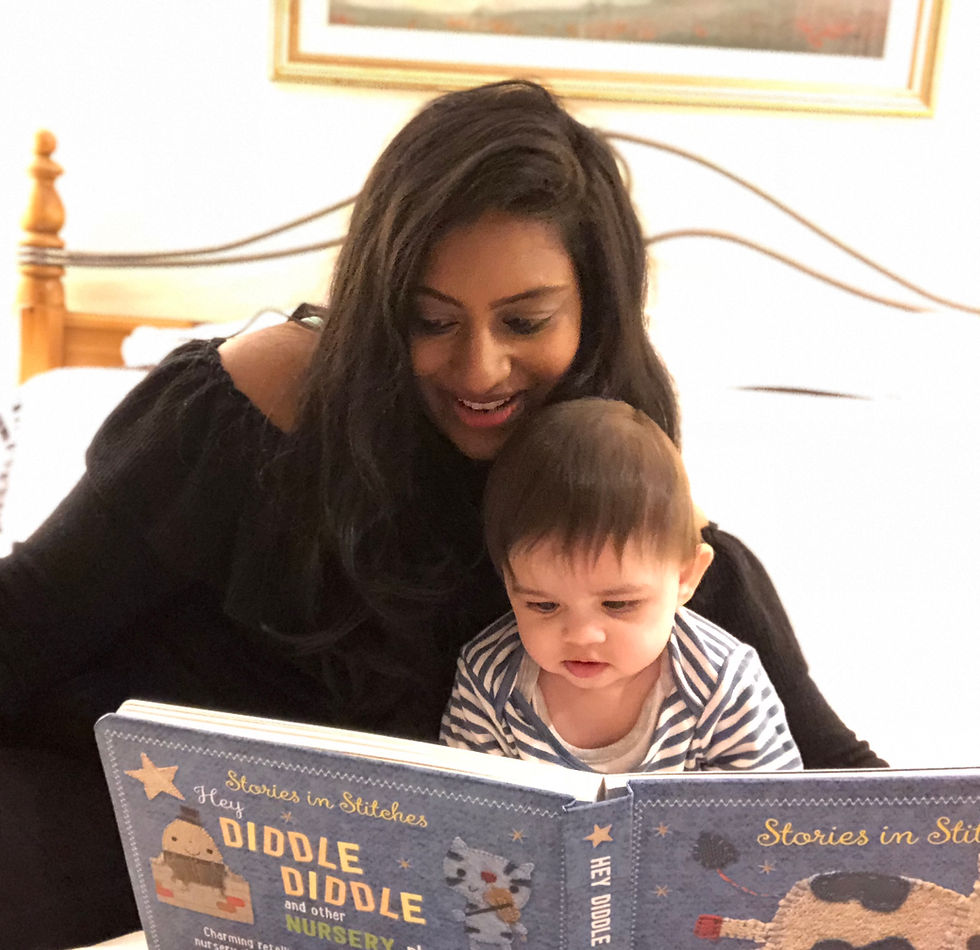
We developed our own ways of reading. Sometimes I would lie flat beside him, holding the book above us. Other times, I would sit him in front of me with the book open where we could both see it. I would point to pictures, exaggerate sounds and change my voice for different characters. Some days we made it through an entire book; on others, his attention wandered after a few pages, and we stopped.
At the time, I was interested in the developmental benefits of reading to babies. Looking back, what strikes me is how much was happening during those simple moments, long before my son could recognise letters, understand a storyline or say his first words.

Why Reading to Your Baby Matters Before They Understand Words
One of the most interesting things about early language development is that babies begin learning about language before they understand what individual words mean.
From infancy, children are sensitive to the sounds, rhythms and patterns of the language spoken around them. Over time, their developing brains become increasingly attuned to the sound combinations they hear regularly, helping them begin to distinguish words and eventually connect them with meaning.
Research into infant language learning has demonstrated that babies can detect patterns in speech well before they can talk. Studies by developmental psychologist Jenny Saffran and colleagues have helped establish how infants use regularities in language to support early learning (Reference).
This doesn't mean a newborn understands a story being read aloud. Rather, reading provides another opportunity to hear language being used in a rich, varied and engaging way.
Books also introduce vocabulary, sentence structures and expressions that may not feature as frequently in everyday conversation. Even familiar children's stories can expose babies to different rhythms and patterns of speech.
The significance of reading to a baby isn't that they understand everything being said. It's that they are already beginning to learn from the language they hear.
And importantly, reading is only one part of that language environment. Talking, singing and responding to babies throughout the day are valuable too.
The Benefits of Reading to Babies Happens Beyond the Words on the Page
When my son was tiny, I quickly discovered that how I read seemed to matter just as much as what I read.
He particularly enjoyed it when I became animated, changing the volume and tone of my voice. I would point to pictures, imitate sounds and pause when he reacted. His little noises often prompted me to respond, and what began as reading a story would become a rather entertaining exchange between the two of us.
I didn't think of it in developmental terms at the time, but this kind of interaction is an important part of what researchers call shared reading.
Shared reading is different from simply reading words aloud while a child listens. It involves the interaction around the book: noticing what interests the child, responding to their expressions, pointing to pictures and, as they grow, encouraging them to participate.
The American Academy of Pediatrics, in its updated 2024 guidance, recommends shared reading from birth. Its recommendations emphasise not only early language and literacy development but also the nurturing interactions between children and their caregivers that reading can encourage (Reference).
That distinction matters because parents can become understandably focused on whether their child is learning something measurable.
Yet when you're reading to a baby, the experience isn't simply about introducing vocabulary. It's also an opportunity for closeness, communication and the beginnings of shared attention.
A baby looking at a picture, listening to a familiar voice or responding to a change in expression is participating in the experience, even if that participation looks very different from an older child asking questions about a story.
How Reading Changes as Your Baby Grows
We began with soft books, including Night Night Peter Rabbit, before moving on to board books such as Peter Rabbit: My First Little Library.
As my son grew, I gradually introduced longer stories, including books from the Paddington Suitcase collection.
By around four months old, I remember him sitting through an entire Paddington story with considerable interest, responding enthusiastically as I read.
Of course, that didn't mean he understood Paddington's adventures in the way an older child would. But it was interesting to see how his attention and engagement changed over those early months.
I increased the length and complexity of the books as he grew, rather than following a fixed schedule for what he should be reading or listening to at a particular age.
Looking back, I think that flexibility was important.
A newborn may be most interested in the sound of a parent's voice. An older baby might begin reaching for a book, touching its pages or looking closely at illustrations. A toddler may want to point to familiar objects, repeat words or demand the same story several times.
Eventually, the experience becomes more conversational, with questions, predictions and discussions about what is happening.
There is no single moment when reading suddenly becomes beneficial. The nature of the experience changes as the child develops.
And the same book can offer something different at different ages.

You Don't Have to Finish the Book
One thing I never insisted on was finishing a story.
If my son became distracted, I stopped. Sometimes we returned to the book later; sometimes we didn't.
I think this is worth emphasising because it's easy to approach reading with young children as another activity that needs to be completed.
With babies especially, attention can be brief and unpredictable. They may be interested in a picture for a few moments before becoming fascinated by something entirely different.
That doesn't mean the reading session has failed.
The purpose isn't to get through a certain number of pages or demonstrate that your baby can sit still for a particular length of time. It's to make books part of an enjoyable interaction.
As children grow, following their interests can become even more valuable. They might want to spend several minutes discussing one illustration, skip ahead to their favourite page or hear the same story repeatedly.
The book provides the starting point, but the interaction doesn't always have to follow the author's intended sequence.
Reading with a child is not a test of their attention span, or yours.
What Does Research Say About Reading to Babies and Language Development?
There is a substantial body of research connecting shared reading with early language and literacy development.
One particularly useful study is a 2020 systematic review and meta-analysis published in Child Development, which examined 19 randomised controlled trials involving 2,594 children aged approximately one to six years. The researchers found that interventions designed to improve how adults shared picture books with children produced improvements in children's expressive and receptive language skills. The effects on children's language were generally modest, while improvements in caregivers' book-sharing abilities were larger (Reference).
This is important because it suggests that the quality of the interaction around a book matters, rather than simply the presence of books in the home.
A separate meta-analysis of 38 studies examined how children learn words through shared storybook reading. It found that aspects of the reading interaction, including how adults engaged children, influenced word-learning outcomes (Reference).
There are some important distinctions here.
Much of the experimental evidence involves toddlers and preschool-aged children rather than newborn babies. We should therefore be careful about suggesting that reading to a two-week-old has been shown to produce a particular academic advantage years later.
The evidence is stronger for the broader value of shared reading throughout early childhood, including its relationship with language development, vocabulary, literacy and positive parent-child interaction.
The American Academy of Pediatrics also highlights evidence associating earlier shared reading with stronger preschool language skills and greater interest in reading. Its guidance encourages parents to begin reading during the newborn period and continue throughout childhood.
For me, the important message isn't that starting at two weeks is necessarily better than starting at two months. It's that parents don't need to wait until their baby can understand a story before introducing books.
Does Reading Early Encourage a Lifelong Love of Books?
One of the reasons I wanted to introduce reading so early was the hope that books would become a natural and enjoyable part of my son's life. I didn't want reading to begin as something associated exclusively with school, homework or academic expectations.
I wanted books to be familiar objects, something we could enjoy together long before he was expected to learn to read independently. There is evidence that shared reading in early childhood is associated with children's interest in books and emerging literacy skills. But it would be too simplistic to suggest that reading to a baby guarantees a lifelong love of literature.
Children develop different interests, and their relationships with books change over time.
What parents can do is create opportunities for reading to become familiar, pleasurable and part of ordinary family life.
For us, reading also became something that could be incorporated into bedtime. I liked the idea of establishing a familiar sequence at the end of the day, with a book forming part of the transition towards sleep.
But reading doesn't have to happen at bedtime. It can happen in the morning, during a quiet afternoon or whenever there is an opportunity to sit together. Nor does it need to happen for a prescribed number of minutes. A short, enjoyable interaction is more valuable than turning reading into an obligation that neither parent nor child particularly enjoys.
Reading, Knowledge and the Wider Development of Capability
As my son has grown, I've become interested in another aspect of reading that extends beyond early literacy. Books gradually introduce children to people, places, ideas and situations they may never encounter directly.
They can provide language for experiences children haven't yet had, introduce unfamiliar concepts and encourage questions about the world beyond their immediate surroundings.
This is one reason I see reading as part of a much broader conversation about What it means to raise capable children.
Capability isn't simply about achievement or accumulating knowledge. It also involves gradually developing the understanding needed to interpret situations, consider information and make decisions.
Reading cannot achieve all of that on its own, of course. But language and knowledge provide some of the foundations children draw upon when trying to understand unfamiliar information.
That becomes particularly relevant as children grow up in an environment where information is increasingly easy to access and generate.
In Raising Children in the Age of AI: Why Judgement Matters More Than Ever, I explore why knowledge remains important even when technology can provide sophisticated answers almost instantly. A child needs some understanding of the world to recognise when an answer is plausible, incomplete or potentially misleading.
Reading is one of several ways children can gradually build that understanding.
Why I Would Still Start Reading From the Very Beginning
When I think back to reading Peter Rabbit to my son at two weeks old, I don't imagine that he was absorbing the story or developing some extraordinary advantage because we began so early.
What I remember is the experience itself. Lying beside him with a book above us, changing my voice to see how he would respond, hearing his little gurgles and gradually discovering which sounds and stories held his attention.
As he grew, the books changed, his responses changed and the way we read together changed too. The research gives us good reasons to value shared reading from infancy. It can support early language development, encourage positive interactions and help establish familiarity with books long before formal education begins.
But I also think there is something reassuring about how ordinary the experience can be.
You don't need an elaborate reading programme, an expensive collection of books or a baby who will sit through an entire story.
You can start with a book you enjoy, read a few pages, respond to your baby's interest and stop when they've had enough. Your baby doesn't need to understand the story for reading together to be worthwhile. And perhaps that's the most important thing I would tell a parent wondering whether it's too early to begin.
Shanti
The Kensington Diary




Comments