
Travelling with a Baby and Toddler: What to Pack, What to Rent and What to Leave at Home

Aug 6, 2025
7 min read
Updated: May 18
Here is the thing nobody told me before our first trip with our son.
Babies adapt. You need less than you think. And almost anything you forget, you can buy when you get there.
Our son was two months old on his first trip. Four months when we flew long haul to Jamaica. Five months when we drove the entire California coastline from Napa Valley to San Diego, two and a half weeks on the road, one of the best trips we have ever taken as a family.
In his first year we also did Paris, Rome, South Africa (Cape Town, Johannesburg and the East Coast), Monaco, South of France (Nice, Cannes, Cap d’Antibes, Saint-Tropez and Provence). None of it was as complicated as I feared before we left.
The anxiety around baby travel gear is real but it is disproportionate to the actual problem. Yes, formula powder is worth bringing because switching brands mid-trip can disrupt a baby’s digestion. Yes, a compact stroller makes airports considerably easier. But the rest? You can almost certainly buy it, borrow it or ask your hotel to provide it.
This is what I actually know about travelling with a baby and toddler based on doing it extensively from the very beginning.

Travelling with a baby: what you actually need
The stroller
A lightweight cabin-approved stroller is the single most useful piece of kit for travelling with a baby. The Babyzen YOYO2 was our choice and we used it for years. It folds into overhead compartments, works for city breaks and beach holidays, and is genuinely worth the investment if you travel regularly.

Other options worth knowing about: the Joolz Aer+ for one-handed folding and a generous storage basket, the Silver Cross Jet for newborns needing a lie-flat recline, and the Cybex Libelle if you want the smallest and lightest option available.
Always check your airline’s stroller policy before you travel, some have size and weight restrictions regarding the overhead compartment. Some flights might have smaller overhead compartments than standard so this is worth checking too.
Sleep at Destination
Maintaining your baby’s sleep environment while travelling is worth the effort. The BabyBjörn Travel Cot Light is lightweight and quick to set up. The Nuna Sena Aire is the more luxurious option with a ventilated design and bassinet attachment for younger babies.
For very young babies, a Sleepyhead or DockATot creates a familiar sleeping environment in an unfamiliar space — we used ours constantly in villas and hotels. That said, almost every luxury hotel provides a travel cot on request and the quality is generally good. I would not automatically pack your own unless you have a specific reason to.

Sleep on Long Haul Flights
If you are flying long haul with a young baby, request a bassinet, also called a sky cot, at the time of booking. Do not leave this until closer to the flight. Bassinets are attached to bulkhead seats and the number available on any aircraft is limited, typically three to four per flight. Most major airlines including British Airways, Virgin Atlantic, Emirates, Lufthansa and Air France offer them free of charge in economy on long haul routes, but they are allocated on a first come first served basis.
The general rule is to request at the time of booking and confirm again at least 48 hours before departure. British Airways allows you to book online during the ticket purchase process. Most other airlines require a phone call to their reservations team rather than an online request, worth doing immediately after booking rather than remembering later. Weight and length limits apply and vary by airline, most are designed for babies up to approximately 10 to 11kg and under 70cm in length, which typically means under six months old, though this varies. Once your baby can sit upright unassisted, the bassinet is no longer appropriate.
One practical note: during takeoff, landing and any turbulence, the baby must come out of the bassinet and onto your lap. But for the cruise portion of a long flight, having somewhere to put a sleeping baby that is not your arms is genuinely transformative.
Formula and feeding
If you are formula feeding, bring your own powder for the trip. Switching brands mid-holiday can unsettle a baby’s digestion and the stress is not worth it. Pre-portion feeds into compartmented containers to make nights easier.
For travel specifically, ready-to-feed liquid formula is worth knowing about. Aptamil, Kendamil and HiPP all produce ready-made liquid options that require no preparation, no measuring, no sterilisation of powder equipment. Kendamil’s ready-to-feed is particularly good, no palm oil, no fish oil, made in the UK, and available in individual bottles that are perfect for flights and travel days when prep is impractical. Aptamil ready-to-feed is the most widely available internationally. HiPP Organic is the choice if you prefer an organic option.
If you are breastfeeding, the logistics are simpler in some ways, no formula to source, but travelling with a nursing baby brings its own considerations. A good nursing cover, a small portable pump if you need one, and lanolin cream for long haul flights where skin dries out quickly are all worth packing.
Microwave steriliser bags like Medela are compact and worth bringing for bottles and dummies.
Nappies and swim nappies
Bring enough nappies for the first two days and buy locally after that. Nappies are available at supermarkets and pharmacies in virtually every destination we have ever travelled to. Swim nappies — brands like Huggies Little Swimmers are reliable and widely available are worth packing if you are going somewhere with a pool or beach.
Toys
Compact soft books, stacking cups and teething rings travel well. Stacking cups in particular are genuinely versatile, beach, bath, anywhere. An interactive toy with lights and sounds keeps younger babies entertained during villa downtime. Keep it minimal. Babies are genuinely entertained by their environment at this age.

What to rent rather than bring when travelling with a Baby and Toddler
Car seats
Hire them. Most car hire companies offer them as add-ons and they meet local safety standards. Book in advance and confirm the type based on your child’s age and weight.
High chairs
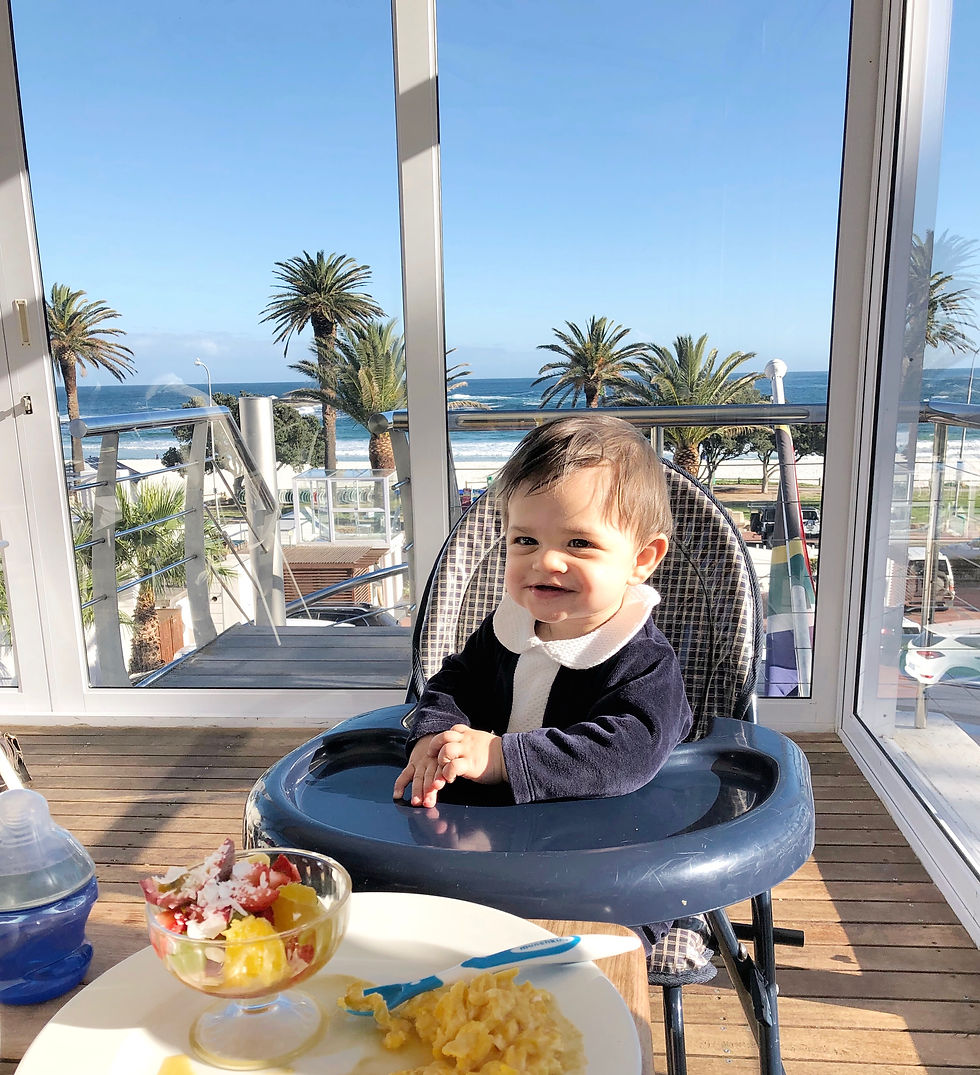
Almost universally provided at luxury hotels and villas. Always confirm in advance rather than packing your own. For Airbnb or villas that do not provide one, requesting a hire locally is straightforward.
What to ask your hotel to provide when travelling with a Baby and Toddler
Before you pack anything, ask your accommodation what they have. Most luxury hotels go considerably further than parents expect. The list worth asking about: travel cot, kettle or milk warmer, high chair, buggy, baby monitor, baby bath. Do not hesitate to request things not on the standard list, good hotels find a way.
A note on baby food, most luxury hotels will prepare simple purées and appropriate meals for babies on request. Ask before you assume you need to pack jars. We rarely needed to bring baby food beyond a few pouches of Ella’s Kitchen for the first day or flight emergencies.
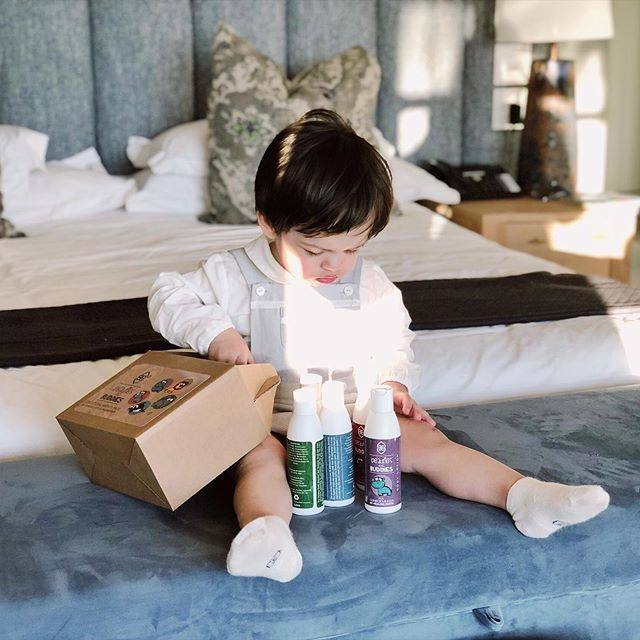
Many luxury hotels provide great child-friendly toiletries, however, not all. If you baby or toddler has sensitive skin, it is worth checking with them about the brands available in advance.
Travelling with a toddler: what changes
The toddler stage is actually easier to travel light for than the baby stage — if anything, parents tend to overpack more at this point, not less.
The stroller
Keep the lightweight stroller through the whole of toddlerhood. You want it for airports, for long days out, for whenever small legs run out of energy. The Babyzen YOYO2 works well into toddlerhood. The key is keeping it light — you do not want to be managing a heavy pushchair through an airport with a toddler who also wants to walk half the time.
Sleep
Almost every hotel has appropriate bedding and a travel cot or toddler bed available. I would not travel with a travel cot for a toddler, the hotel provision is reliable enough and the luggage saving is significant. Check in advance rather than assuming, but in our experience across luxury hotels on four continents, this has never been a problem.
Feeding and snacks
Toddlers can eat what you eat. We adapted our son to the local food from the very beginning and he eats everything which makes travel considerably easier than it would otherwise be. A small supply of familiar snacks for flights and travel days is sensible. A bag full of snacks for the whole trip is unnecessary.
A small backpack with snacks, a water bottle and a couple of compact toys gives a toddler something to manage themselves, which they enjoy, and keeps essentials accessible without you having to dig through a large bag.
Toys and entertainment
Compact toys, simple games and a downloaded selection of programmes for long flights and transfers. That is genuinely all you need. Do not overpack the entertainment. Toddlers are curious and engaged by new environments in a way that makes elaborate entertainment largely unnecessary once you arrive.
What you do not need for a toddler
Portable high chair: hotels have them.
Travel playmat: unnecessary at this age.
Corner protectors and elaborate childproofing equipment: we never used these and have stayed in hundreds of hotels across the world with our son.
Car seat: hire one, always.


Comments