
Private Tutors in London: What a Parent Needs to Know to Prepare for 7, 8 and 11+ Exams

Nov 11, 2025
4 min read
Updated: 6 days ago
I remember the moment it hit me. I was on a waitlist. For a tutor. Ten months out from my son's 7+ exams.
That was my introduction to London’s private tutoring world and nothing about it was what I expected. Not the cost, not the competition, not the timeline, and certainly not the gap between what parents think they’re buying and what they’re actually getting.
If you’re at the beginning of this process, I want to be honest with you about something first: most parents enter this world without understanding it. They book a tutor before they understand what the tutor is preparing their child for. They spend significant money before they know what questions to ask. And they discover the gaps later usually at a point where there isn’t much time left to correct them.
This post won’t give you the full picture. That exists in a different place. But it will give you enough to start asking the right questions when exploring tutoring agencies in London.
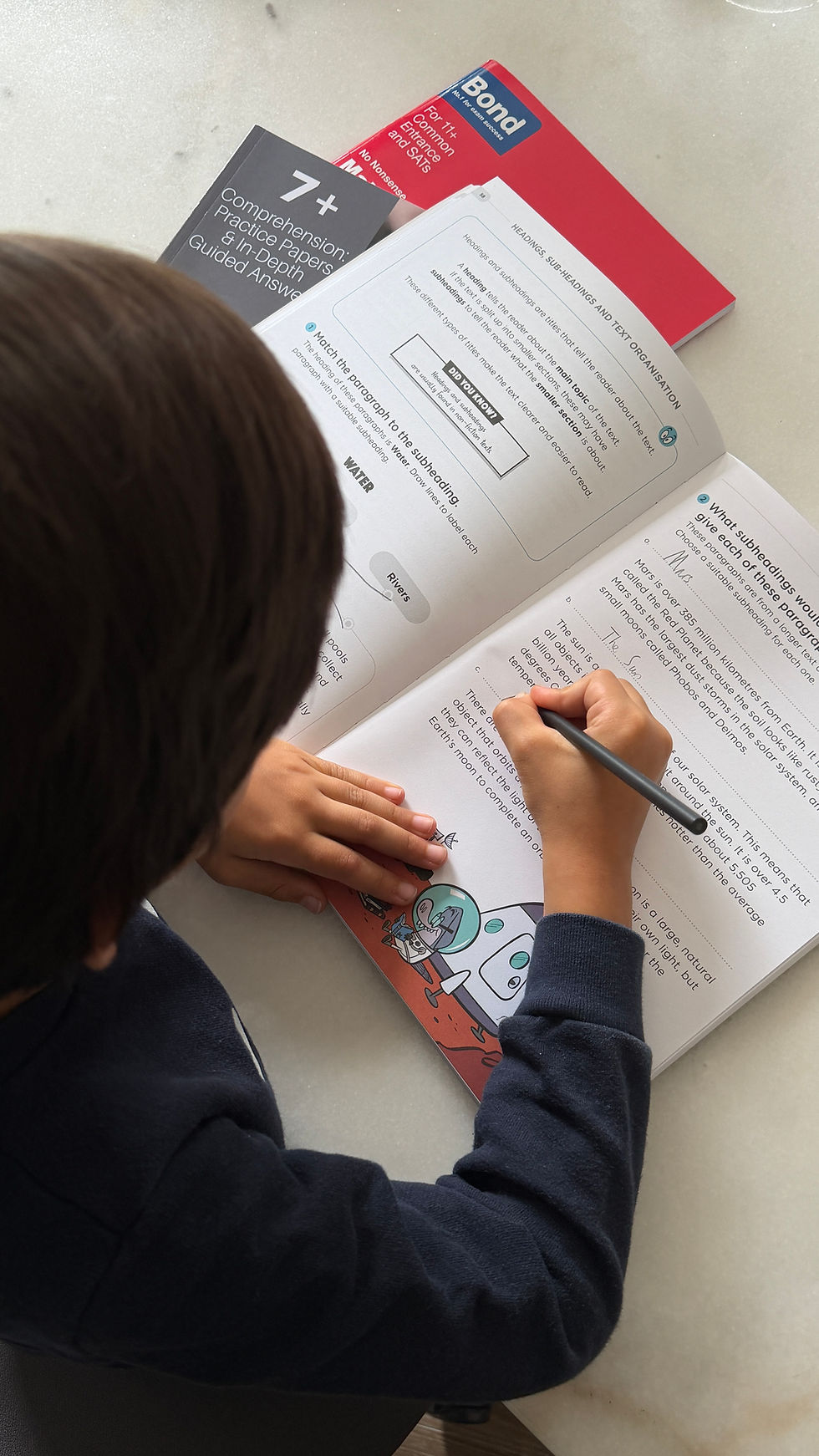
The cost of tutoring agencies in London
A good tutor with a strong track record at London’s selective independent and private schools charges in the region of £150 per hour. Some charge more.
That figure tends to land as a shock. What you’re paying for — when you’re paying for the right person is not an hour of English and Maths. It’s school-specific knowledge, assessment experience, and an understanding of what these schools are actually looking for that goes considerably beyond what appears on the practice paper. That knowledge is scarce. The market prices it accordingly.
Budget for it from the beginning rather than discovering it when you’re already committed to a timeline that doesn’t allow for adjustment.
The timeline
For the 7+ examinations which your child sits in Year 2, aged six or seven the anxiety around when to start has become its own industry. I’ve heard parents speak about beginning preparation at four. There are tutors who will take children that young. The same principles apply for 8+, 11+ and 13+.
My son started at six. Six months before his assessments. He was fine.
What matters is not when you start. It’s how structured and well-informed that preparation is. Six months with the right approach will outperform two years of unfocused weekly sessions. What never works, at any age, is cramming at the end. These schools have been doing this long enough to see the difference between a child who is ready and a child who has been drilled.
The earlier decision isn’t when to start tutoring. It’s when to start understanding the process. Those are two very different things and most parents conflate them.
The agencies
You’ll hear certain names mentioned consistently in Central London parent circles — Ivy, Keystone, Yellow Bird, EPP among them. Each operates a different model. Some offer one-to-one tuition. Some run group classes. Some, like EPP, specialise specifically in mock exam conditions, which serve a distinct and useful function at a specific stage of preparation.
The model matters for tutoring agencies in London. A group class works for some children and some stages. One-to-one attention is what others need, particularly as assessment approaches. Understanding the difference between what each model offers and what your child specifically needs is part of the process knowledge that most parents don’t have when they first start looking.
What I will say without naming names: not all tutors in this space have the depth of knowledge the price tag implies. Some agencies supplement their tutor pool in ways that don’t serve your child’s preparation. Some run classes too large to give meaningful individual feedback. Some deliver sessions that amount to little more than handing your child a practice paper and marking it afterwards.
The questions you ask before you book matter more than the name above the door.
What I noticed about tutoring agencies in London
The parents who navigated this well had one thing in common. They understood the process before they entered it. They knew what the schools were looking for, how the assessment was structured, what the interview revealed that the written paper didn’t, and what good preparation actually looked like before they handed any of that to a tutor.
The parents who struggled were the ones who trusted the process entirely to someone else without the knowledge to evaluate whether it was working.
That’s not a criticism of tutors. It’s an observation about what this process actually requires of parents which is considerably more than most people tell you at the beginning.
If you want the full picture
Everything I’ve learnt about this process, the school landscape, the assessment structure by age and entry point, how to evaluate tutors, what these schools are genuinely looking for, and how to approach preparation in a way that doesn’t cost your child their childhood — is in my book.
The Intentional Parent: Understanding the UK’s Independent and Grammar Selective School Process for Ages 4-13 is the guide I wish had existed when I started. It covers the 7+, 8+, 11+ and 13+ in full, not as a practice paper resource, but as a complete map of a process that is genuinely confusing, genuinely high-stakes, and genuinely navigable when you understand it properly.
If you’re at the beginning of this journey and feeling like everyone else knows something you don’t, that’s because this process has never been explained clearly in one place. Until now.
Shanti
The Kensington Diary
xxx
I write regularly about education, London family life and the selective school process. Browse the education section for more or get in touch if you have specific questions.



Comments