
Living in Kensington with Kids: What Families Need to Know
- Shanti | The Kensington Diary

- 4 days ago
- 11 min read
When my son was born, we found ourselves facing a decision that many London parents will recognise. We loved living in St James’s. We loved being able to walk almost everywhere, spending weekends exploring the city and feeling connected to everything that makes London such an exciting place to live. At the same time, we knew life was about to change. We needed parks, nurseries, playgrounds and somewhere a child could simply be a child.
What we didn’t want was to feel as though becoming parents meant giving up everything we enjoyed about living in central London.
South Kensington became the answer.
We eventually found ourselves in a small mews house tucked away just a short walk from the high street. It was one of those rare London homes that felt both central and surprisingly peaceful; quintessentially English in character, yet surrounded by everything that makes city life so appealing. Within minutes we could be among cafés, restaurants, museums and shops, yet our street itself felt calm, almost village-like.
Many of my memories of life with a young child begin there. Setting off with a buggy in the morning, walking to swimming lessons, stopping at Whole Foods on the way home, heading to the Science Museum on a rainy day or spending an afternoon in Kensington Gardens before making our way back. Much of our life unfolded on foot, which, as any parent of a young child will know, is a luxury in itself.
Looking back now, what strikes me most is not the architecture, the beautiful white stucco buildings or even the postcode itself. It is the quality of childhood that existed within such a small radius. Within walking distance were world-class museums, some of London’s most beautiful parks, baby classes, swimming lessons, nurseries and playgrounds. There was always somewhere to go, but there was rarely any pressure to rush.
There are many places that are good for families. There are many places that are good for adults. Kensington is one of the few places I have experienced that manages to offer both. During those early years, it gave us access to everything we hoped for as parents, while still allowing us to remain connected to the city and lifestyle we had loved before having children.
Contents of the article:

Why We Chose Living in Kensington with Kids
Our move was never about chasing a particular school or living into a specific postcode. It was about lifestyle.
We wanted access to green space. We wanted access to culture. We wanted access to activities. Most importantly, we wanted our son to grow up surrounded by experiences that encouraged curiosity and exploration rather than spending his childhood moving between organised activities and structured environments.
What immediately appealed to us about Kensington was how much was accessible on foot. The museums were nearby. Kensington Gardens was nearby. Holland Park was nearby. The high street was nearby. Nurseries, cafés, playgrounds and children’s activities seemed to exist in every direction.
As new parents, that convenience proved more valuable than we could have imagined.
One of the realities of life with young children is that simple logistics can quickly become exhausting. A twenty-minute journey across London may not seem particularly significant until you are trying to navigate it with a buggy, snacks, spare clothes and a toddler who has suddenly decided they no longer want to be there. Living in South Kensington removed much of that friction. Many days began simply by leaving the house and deciding where we wanted to walk.
What I did not fully appreciate at the time was how those small decisions compound over years. Childhood is not built through a handful of grand experiences. It is built through thousands of ordinary days. The easier it becomes to access parks, museums and interesting environments, the more often those experiences naturally occur.

The Luxury of Everyday Convenience
People often associate Kensington with luxury, but for families I would argue that the greatest luxury is convenience.
During those early years, so much of life revolved around walking.
A typical morning might involve stopping at Whole Foods, heading to a class, meeting friends for coffee and then continuing on to a playground before lunch. Very little required planning. Very little required a car. Much of life unfolded within a relatively small area.
Virgin Active became an unexpectedly important part of our routine. It was not simply a gym. Between the childcare facilities, baby swimming lessons and children’s activities, it provided structure during a stage of life where routine can sometimes feel difficult to maintain. Baby swimming became one of our regular weekly activities and gave us something consistent around which to organise the week.
Beyond that, there seemed to be no shortage of classes available for young children. Music classes, sensory sessions, toddler groups and nursery activities filled the local calendar. One of the things I remember most clearly is not searching desperately for things to do, but having to choose between them.
For parents in the early years, that matters. It creates opportunities for social interaction, routine and development without requiring constant travel across the city.
Kensington made family life feel easier than many people expect central London living to be.
The Parks That Defined Our Early Years
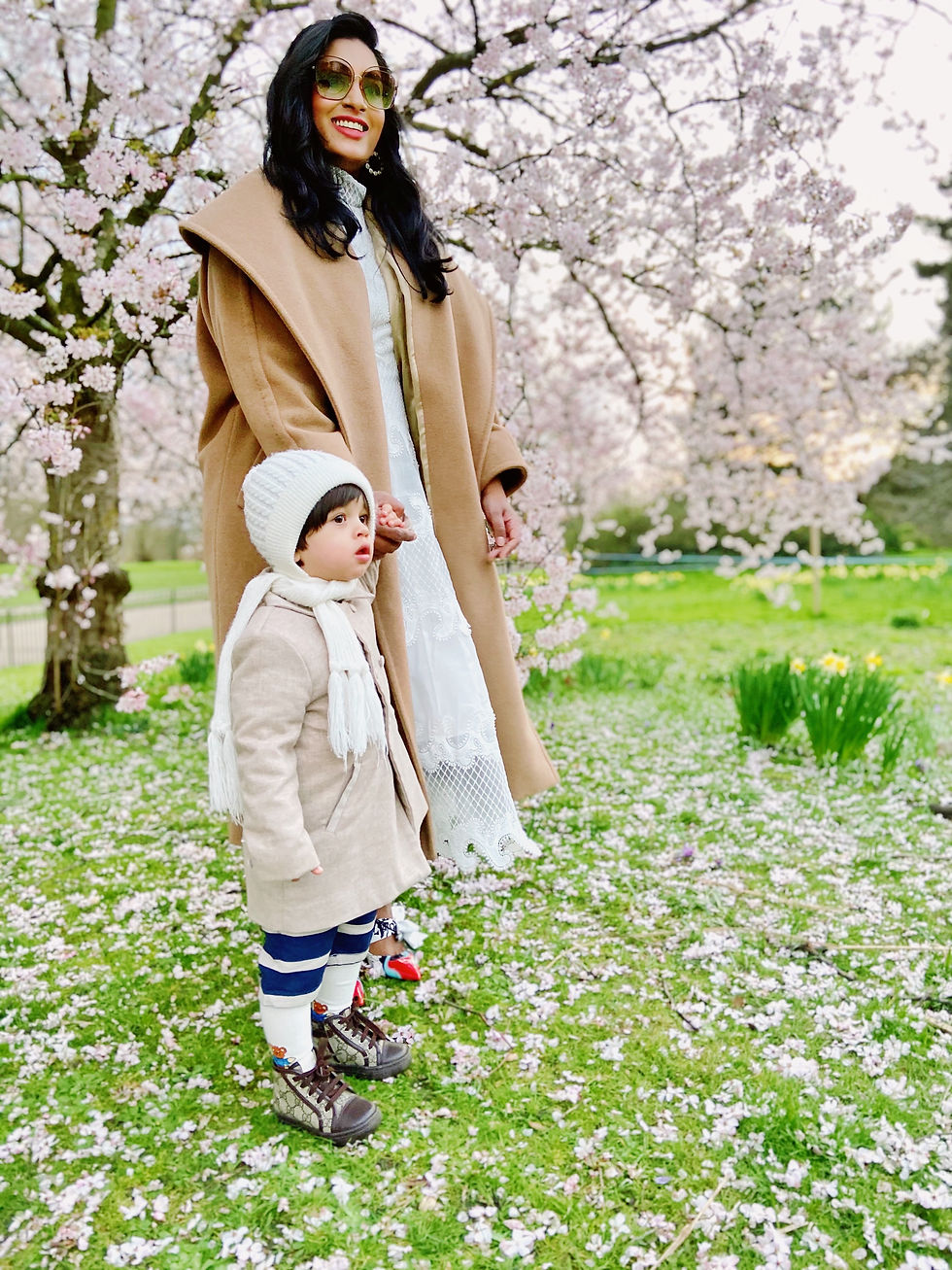
If I had to identify the single greatest benefit of living in Kensington with kids, it would probably be the parks.
Kensington Gardens became woven into the fabric of everyday life. Some visits were purposeful. Others were simply because we needed fresh air and somewhere to wander. The ability to step into such a significant green space within minutes of leaving home never stopped feeling extraordinary.

The Diana Memorial Playground deserves particular mention. For younger children, it is genuinely one of the best playgrounds in London. It became a regular feature of our week and, judging by the number of families who returned repeatedly, we were far from alone. There is something wonderfully timeless about watching children disappear into imaginative play while parents sit nearby with coffee and conversation.

Hyde Park offered something different. It provided scale. Space. Freedom. As my son became older, Hyde Park became less about playgrounds and more about exploration. Long walks, cycling, running and the simple pleasure of having room to move all became part of our routine.
Holland Park always felt slightly different again. Quieter. More local. More intimate. The Kyoto Garden was one of my favourite places to visit when my son was younger, particularly on calmer mornings when the park felt almost hidden from the city around it. In summer, Opera Holland Park adds another dimension entirely, reminding you that living in Kensington is not only about family life but also about remaining connected to culture and the wider city.

What I increasingly came to appreciate was that these parks were not destinations. They were extensions of our neighbourhood. They shaped the rhythm of childhood in ways that are difficult to quantify but impossible to ignore.
Growing Up Around Museums
One of the things that makes living in Kensington with kids genuinely unusual is that some of the world’s most visited museums become part of everyday life.
Before becoming a parent, I thought of museums as destinations. They were somewhere you planned to visit. Somewhere you set aside time for. Living in South Kensington changed that entirely.
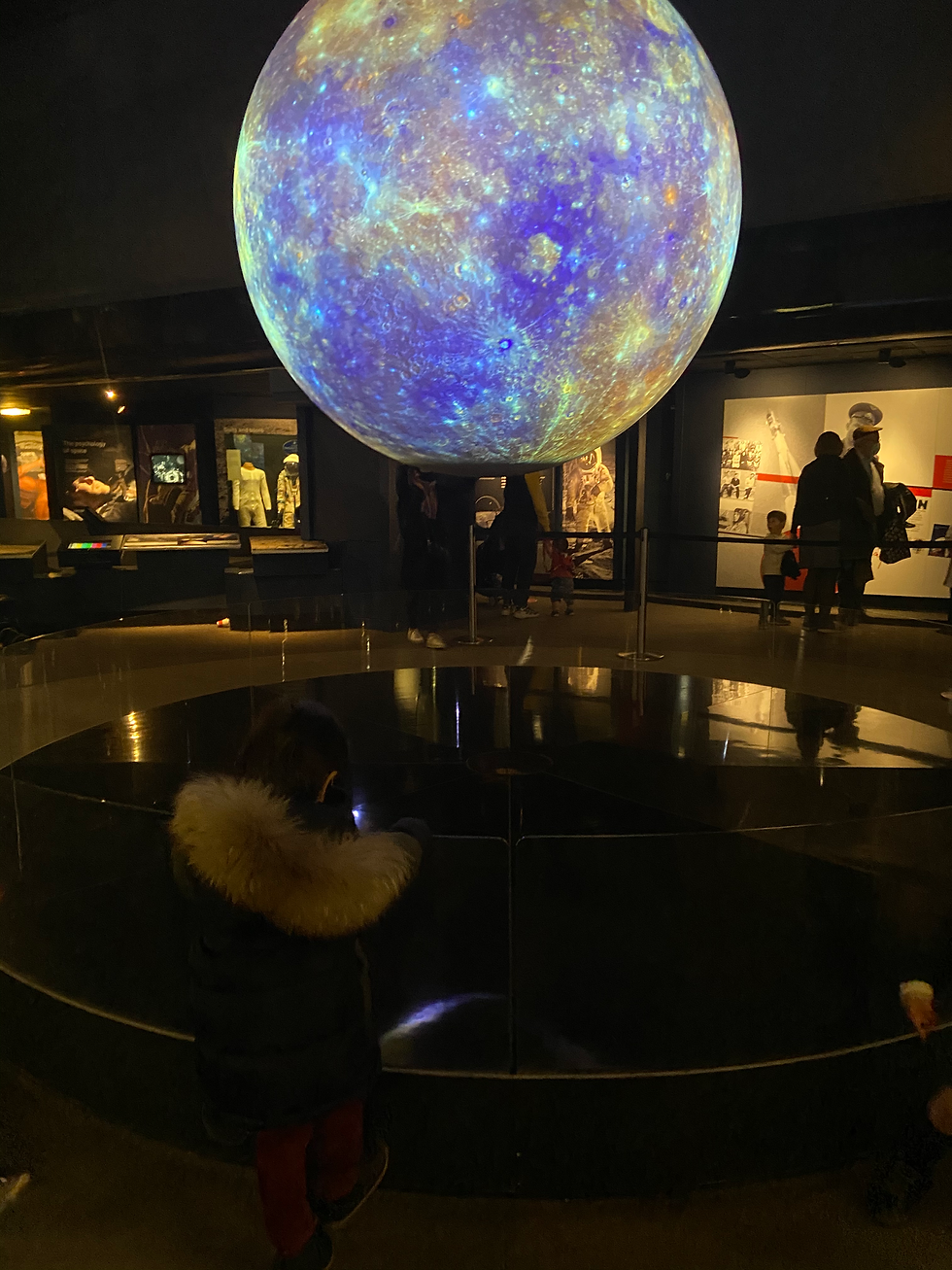
The Science Museum quickly became my son’s favourite for both the Wonderlab, The Pattern Pod and The Garden. We visited so often that it almost stopped feeling like a museum and started feeling like an extension of the immediate neighbourhood. There were days when we would pop in for an hour simply because we were nearby. Other times we would spend half a day there. What I loved most was watching his interests evolve over time. The exhibits he rushed past at three became fascinating at four. Questions became deeper. Connections became stronger.

The Natural History Museum followed a slightly different trajectory. Like most children, he was initially captivated by the giant dinosaurs, the blue whale and dramatic displays. As he became older, however, the museum began to reveal itself differently. Conversations moved beyond simply looking at things and towards understanding them. Curiosity became more sophisticated. Questions became more complex.
Looking back, I think proximity was the key.

If you visit somewhere once a year, it remains an event. If you visit regularly, it becomes part of a child’s intellectual environment. They have the opportunity to revisit ideas, notice new things and build understanding gradually over time.
The Design Museum was another favourite, particularly as he became older. It offered something slightly different from the Science Museum and Natural History Museum. Rather than focusing purely on knowledge, it encouraged thinking about creativity, innovation and how the world is designed around us.

The V&A was not a museum we visited as frequently as the Science Museum or Natural History Museum, but it often surprised me with how well it engaged children through temporary exhibitions and family programming. One exhibition that particularly stands out was the Winnie-the-Pooh exhibition, which brought familiar stories to life in a way that felt imaginative and genuinely child-friendly. What I appreciate about the V&A is that it introduces children to creativity, design, storytelling and art from a different perspective. It offers a useful balance to the science-focused museums nearby and became somewhere we would keep an eye on for special exhibitions as my son grew older.

One of the reasons I believe so strongly in exposure as a developmental tool is because I saw its effects firsthand. Children do not always learn through formal instruction. Sometimes they learn because interesting things become normal. Growing up within walking distance of museums, galleries, exhibitions and cultural institutions changes what a child sees as part of everyday life.
That is difficult to measure, but I suspect it matters enormously.
Growing Up Around Culture
The museums played a significant role in our years in South Kensington, but they were only part of the story.
One of the things I loved most about raising a child in the area was the extent to which culture became part of everyday life. The Royal Albert Hall was close enough that attending a family performance, Christmas concert or seasonal event never felt like a major undertaking. It was simply something we could do.

Some of my favourite memories from those years involve walking there together during the festive season. One of my son’s earliest visits to Father Christmas took place at the Royal Albert Hall, and over time it became somewhere we returned to again and again. Christmas concerts, family performances and the annual rhythm of events became woven into our lives in much the same way that visits to the parks or museums were.

The Proms added to that sense of occasion and recently the first ever Diwali Show was hosted in Royal Albert Hall. Even when we were not attending performances ourselves, there was something special about living in a neighbourhood where music, culture and tradition felt so present. The Royal Albert Hall was not an occasional destination. It was part of the fabric of the area.
Looking back, I think that is one of the things that made South Kensington such a remarkable place to raise a child. Exposure to culture happened naturally. Music, performance and shared traditions became part of childhood itself rather than something reserved for special occasions.

Many of my strongest memories of those years are not tied to a particular museum exhibit or playground. They are tied to those traditions, those walks to the Royal Albert Hall and the sense that extraordinary experiences were simply part of everyday life.
What People Get Wrong About Kensington
Whenever people hear that we lived in Kensington, they often make assumptions.
The first is that it is exclusively for ultra-wealthy families.
Certainly, Kensington is expensive. There is no point pretending otherwise. Yet the reality on the ground is far more diverse than many people imagine. One of the things I appreciated most about the area was its international character. Families arrived from across Europe, North America, the Middle East and Asia. Many were professionals working in finance, healthcare, technology, law or international business. Others were in London temporarily and wanted access to everything the city had to offer during that time.
The result was a community that felt surprisingly international and outward-looking.
Another misconception is that Kensington is dominated by tourists.
While parts of South Kensington are undoubtedly busy, particularly around the museums, daily life is surprisingly local. The people you see repeatedly are parents walking children to nursery, families heading to playgrounds, dog walkers crossing the parks and residents going about everyday life.
It is also far less formal than many people imagine.
People often picture Kensington as elegant but slightly intimidating. My experience was quite different. It felt active, international and full of families juggling exactly the same challenges as parents everywhere else.
There is perhaps a tendency to think that because an area looks polished, life within it must be somehow different. In reality, parents are still negotiating nap schedules, playground visits, swimming lessons and the endless logistics of family life.
The setting may be beautiful, but the experience of parenthood remains remarkably universal.

Why Kensington Allows a Family Life Without Losing Yourself
This was perhaps the most important factor for us.
Many areas are excellent for families. Many others are excellent for adults. Kensington occupies a rare middle ground.
One of our concerns when becoming parents was that our lives would shrink. It is something many parents experience. Activities become increasingly child-focused. Social circles narrow. Entire weekends revolve around entertaining children.
While some of that is inevitable, Kensington helped us maintain a broader sense of identity.
After spending the morning at the Science Museum or Kensington Gardens, it was still possible to meet friends for lunch, wander through an exhibition, browse the shops around Sloane Street or simply enjoy the cultural life that makes central London so unique.
That may sound like a small thing, but I do not believe it is. Parents are still people. Maintaining interests, friendships and experiences beyond parenthood is important, both for wellbeing and for identity. One of the reasons Kensington appealed to us was that it never required us to choose between family life and city life.
The two could comfortably coexist.
I suspect that balance is one of the reasons so many professional and international families are drawn to the area. They want the advantages of family-friendly living, but they do not necessarily want to leave behind everything they enjoyed before having children.
Kensington makes that possible.
Is Kensington a Suburb to Consider for Families?
Whenever people ask whether Kensington is a good place to raise children, my answer is always the same. It depends on what you value.
If your priority is space above all else, there are undoubtedly better options elsewhere in London. If your priority is finding the most traditionally family-oriented neighbourhood, there are areas that cater more directly to that lifestyle.
What Kensington offers is something slightly different. It offers access.
Access to parks. Access to culture. Access to museums. Access to activities. Access to opportunities that become woven into everyday childhood. For our family, that mattered enormously.
Some of my strongest memories from those years are not the major milestones. They are ordinary afternoons at Holland Park. Rainy mornings spent exploring the Science Museum. Walks through Kensington Gardens. Swimming lessons at Virgin Active. Stopping at Whole Foods on the way home. The simple routines that gradually became the fabric of family life.
Looking back, I realise that what Kensington gave us was not simply a place to live. It gave us an environment.
An environment rich in experiences, opportunities and everyday exposure to the wider world. And as someone who has spent much of her professional life thinking about how environments shape behaviour, development and long-term outcomes, I have come to believe that those everyday experiences matter more than we often realise.
Childhood is shaped not only by schools, activities and achievements. It is shaped by what surrounds us every day. For us, Kensington provided a remarkably rich environment in which those early years could unfold. And for that reason alone, I would choose it again.
Shanti
The Kensington Diary
xxx


Comments